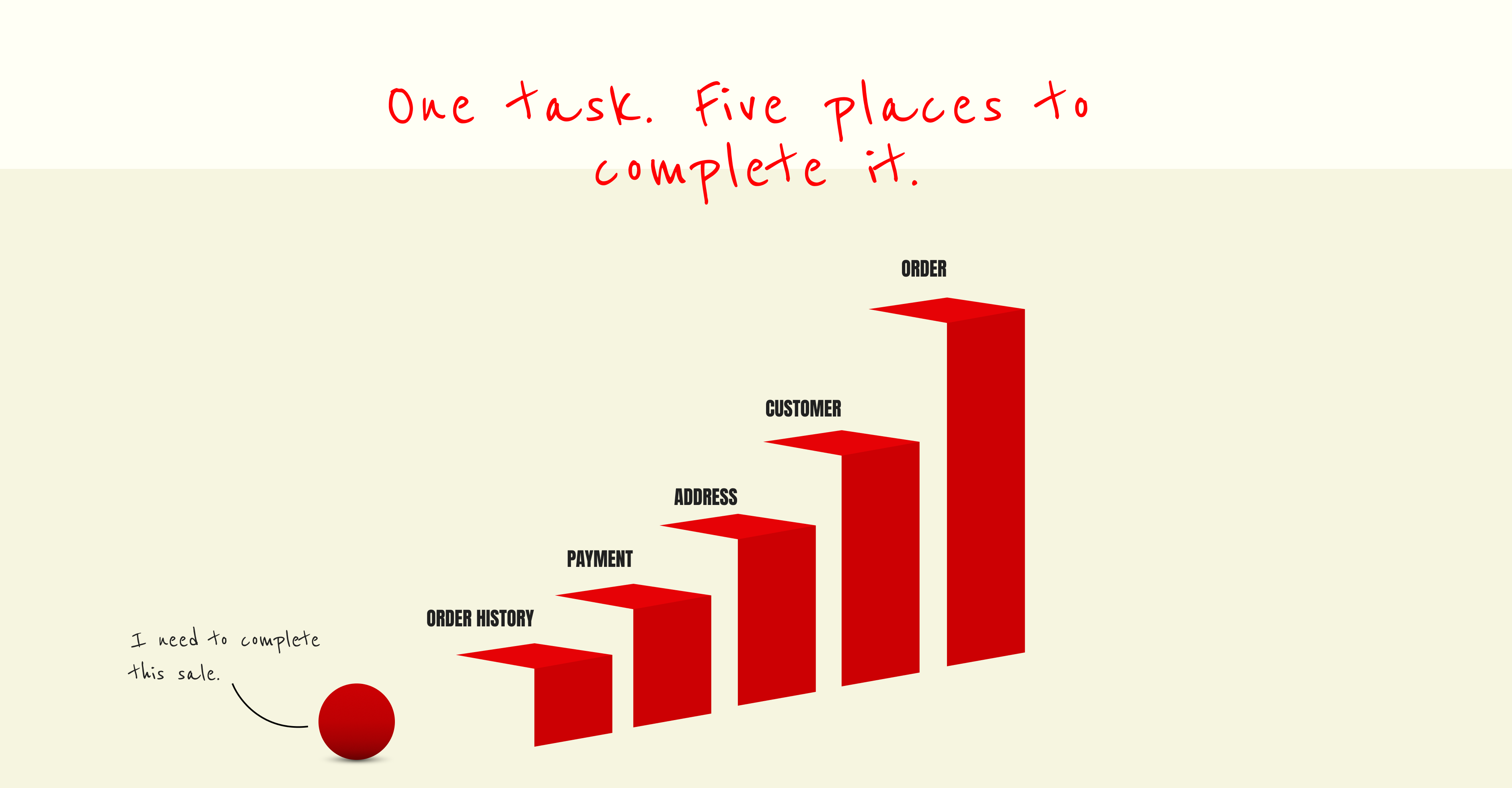
Koala Living's POS supported day-to-day operations across multiple retail locations, including sales, customer management, payments, and fulfilment. Over time, the platform had accumulated features and modules without its underlying structure evolving with them.
The system had everything employees needed. It just wasn't organised around how they worked.
A seemingly simple transaction could require employees to move across four or five different areas of the platform. Creating an order, managing customer details, processing payment, and checking previous orders were treated as separate journeys even though they were part of the same task. The problem wasn't missing functionality.
It was the distance between what the employee wanted to accomplish and how the system expected them to navigate.
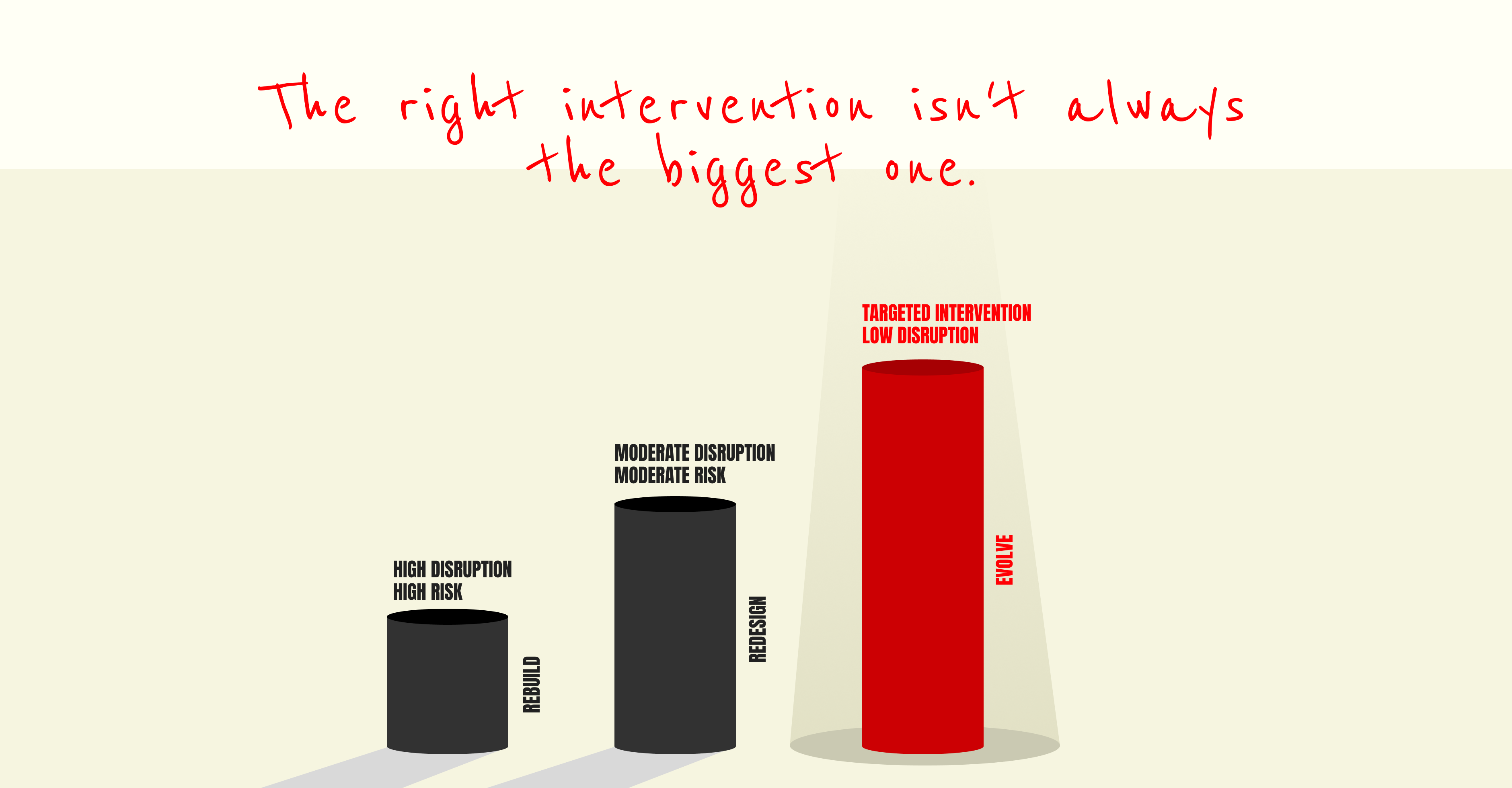
The POS was deeply embedded in daily operations, with sales and fulfilment workflows built around it. Replacing the platform would introduce operational risk and force employees to relearn established behaviours.
That changed the design question:
How do you make an established system better without disrupting what already works?
I mapped the platform end to end: navigation, transactional flows, module relationships, and the points where employees repeatedly switched context. The audit revealed that the system was structured around its software history, while employees approached it through task-oriented goals.
Three patterns consistently surfaced:
Buried actions
High-frequency tasks were several layers deep.
Fragmented workflows
One transaction required movement across disconnected sections.
Inconsistent interactions
Similar actions behaved differently across the platform.
The system was organised around how it was built. Users were working around how it worked.
Given the constraints, the redesign had to be surgical rather than sweeping. I established three principles: align the structure to workflow, reduce cognitive load at decision points, and preserve behaviours that were already operationally stable. The objective wasn't to simplify the system.
It was to make the existing complexity easier to navigate and less expensive to operate.
Surface what people use most
High-frequency actions were buried beneath navigation designed for comprehensiveness rather than speed. Bringing them closer to the point of use reduced daily friction without introducing new functionality.
The system didn't need more features. It needed the right features in the right place.
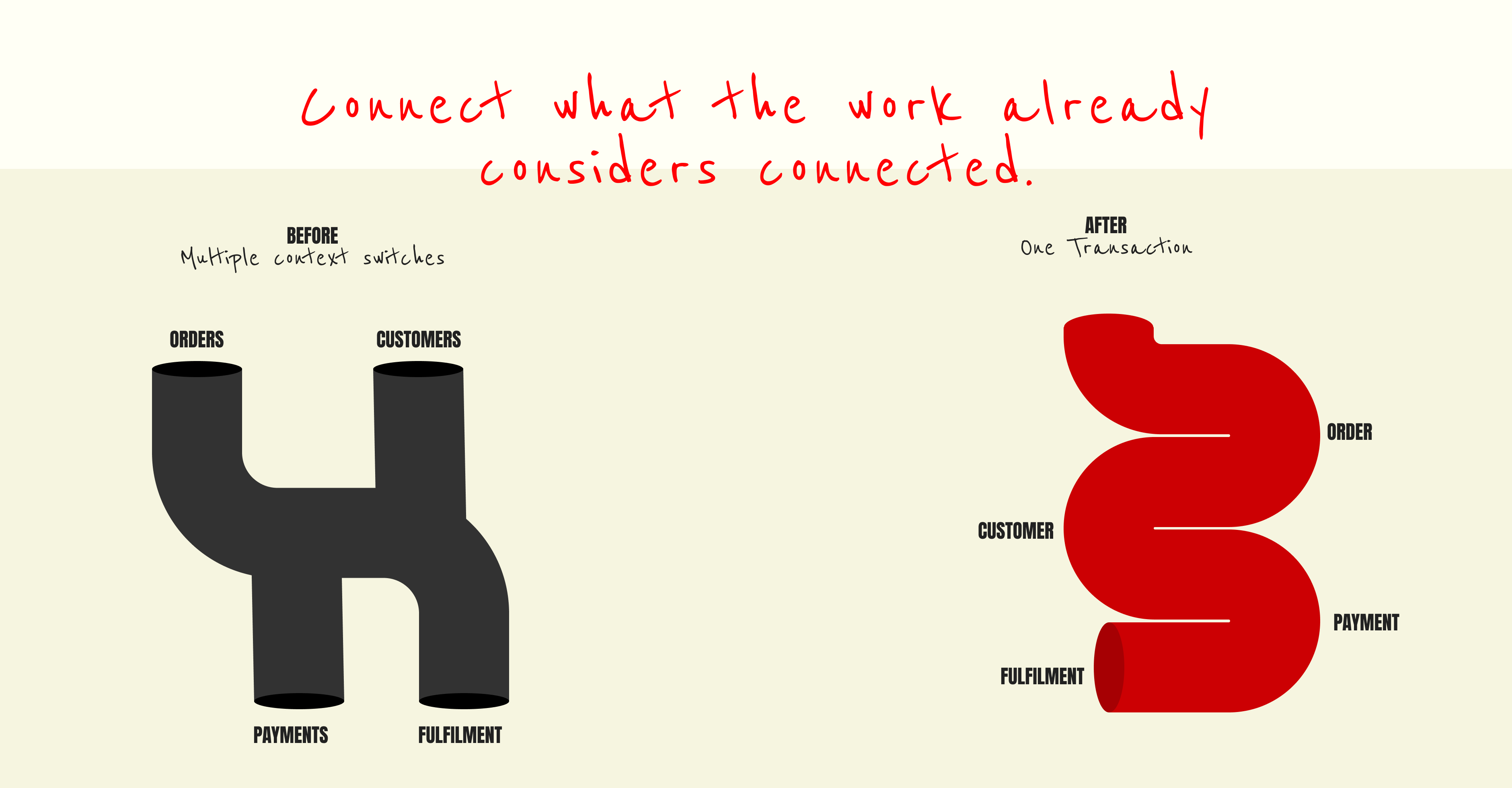
Connect what belongs together
Sales, customer information, payment, and fulfilment were redesigned as connected stages of one transaction rather than separate modules. Reducing context switches created greater continuity across the workflow.
Make the system predictable
Interaction patterns were standardised across the platform, editing records, confirming actions, and initiating searches, so knowledge could transfer from one part of the system to another.
The redesigned experience reduced friction across the workflows employees performed repeatedly throughout the day. Navigation became faster, common actions required fewer steps, and previously disconnected workflows became more continuous.
More importantly, the system began to reflect how employees actually worked rather than requiring them to adapt to how the software had evolved.
Koala Living taught me that enterprise design is often less about knowing what to change than knowing what not to change. Existing systems contain years of embedded behaviour, workarounds, and operational knowledge. Good redesign respects that history while identifying the points where a precise intervention can meaningfully improve the experience.
How do you make an established system better without disrupting what already works?
The skill is not simply making a system better. It's knowing how much better it needs to be, and where to stop.