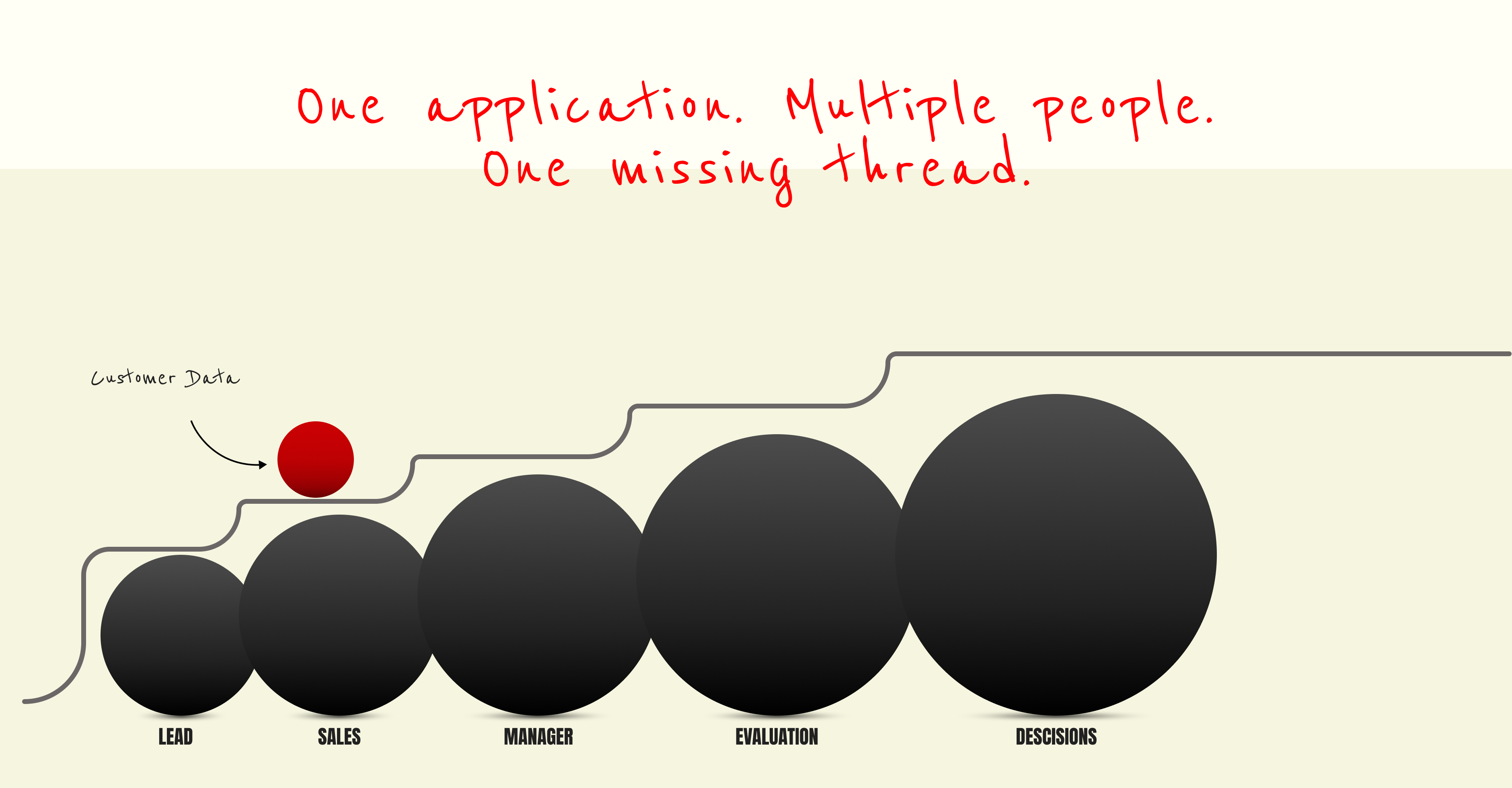
Paisalello operates in used vehicle financing, where every application moves through customer acquisition, verification, vehicle assessment, financial evaluation, and approval. The brief was to build a CRM, but the existing process was spread across calls, WhatsApp, spreadsheets, and fragmented system records.
The real problem wasn't building a CRM. It was building an operational system the business could rely on.
A sales representative could receive customer information through a call, WhatsApp, or an in-person conversation, then enter it into the system later. Managers often had to reconstruct application status by calling sales representatives and cross-checking their notes.
Information existed, but it had no consistent home.
Digitising a broken process doesn't fix it. It makes the dysfunction harder to see.
I mapped the complete customer lifecycle from initial inquiry through evaluation and final decision, looking at how information moved between sales, management, and administration. Rather than turning the brief into a list of CRM features, I used the workflow to define what the product actually needed to support.
Three structural problems emerged:
Fragmented information
Customer data existed across multiple channels without a reliable source of truth.
Disconnected roles
Sales, managers, and administrators needed different information and responsibilities, but the system treated them too similarly.
Unstructured evaluation
Loan assessment had no consistent sequence, ownership, or visibility, making decisions difficult to compare or audit.
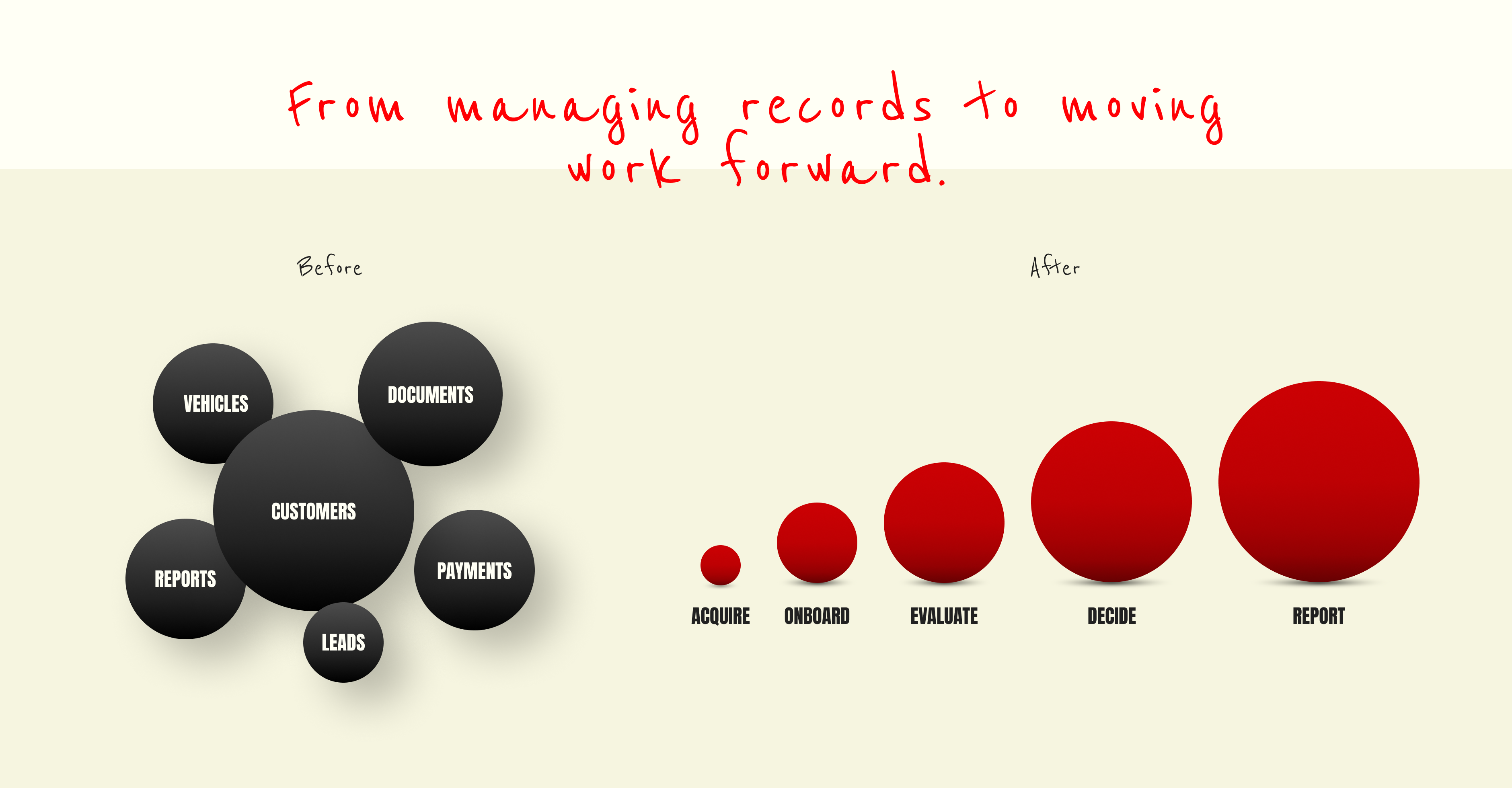
The first major design decision was to move away from a traditional CRM structure built around objects such as customers, vehicles, documents, and leads. I reorganised the information architecture around activities: acquiring leads, onboarding customers, conducting evaluations, making decisions, and reporting outcomes.
The real problem wasn't building a CRM. It was building an operational system the business could rely on.
Role-based access became part of the experience rather than a technical layer applied afterwards. Sales representatives, managers, and administrators shared the same underlying system but received different interfaces based on their responsibilities and decisions.
A sales representative didn't need to see financial evaluation details. A manager needed visibility across applications. An administrator needed broader oversight and auditability.
The complexity remained.
It was simply distributed to the people who needed it.
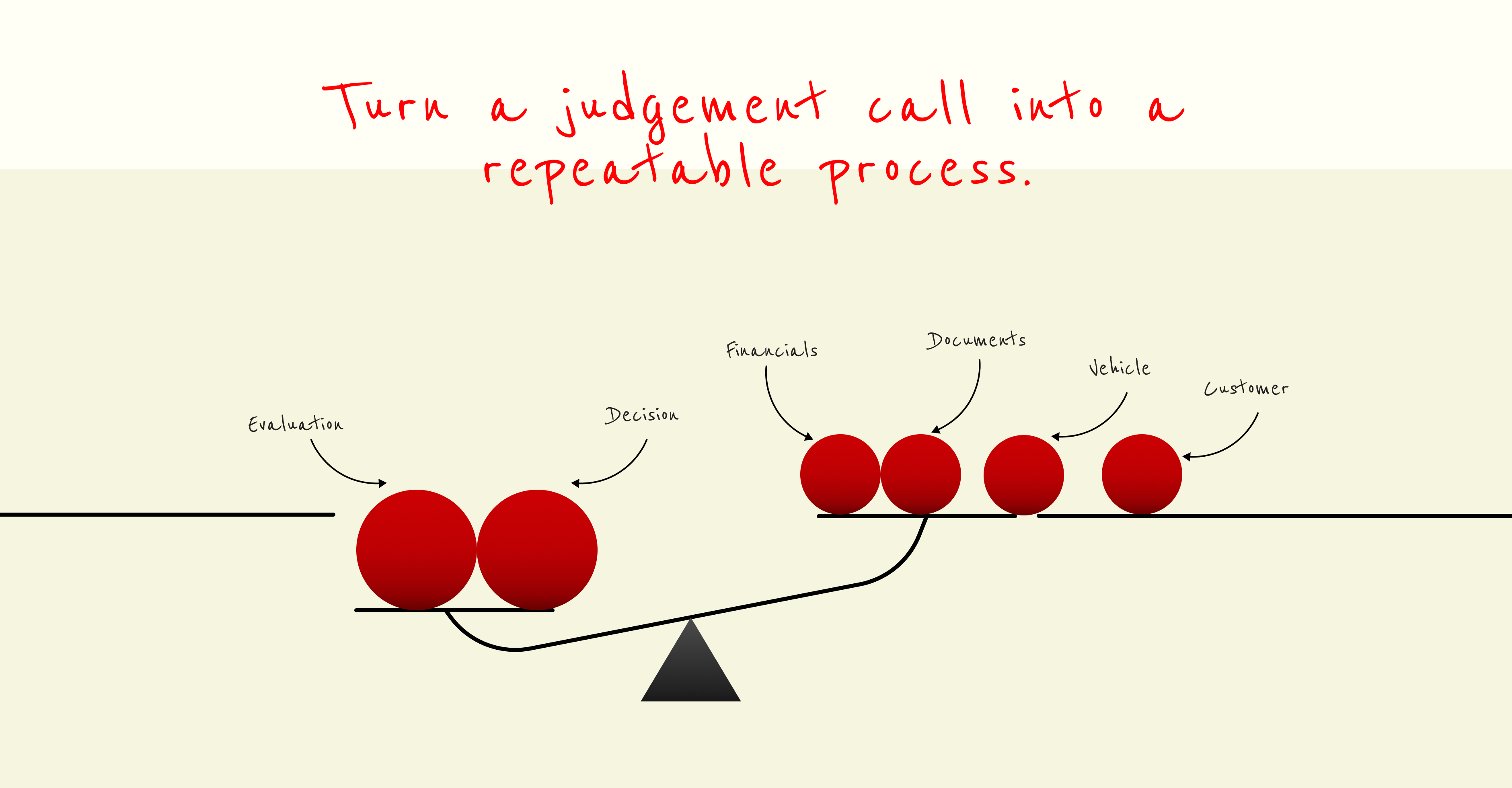
Loan evaluation was the most complex part of the system because multiple types of information had to come together before a decision could be made. I structured the process into defined stages covering customer information, vehicle assessment, documentation, financial credibility, and the final decision.
Progressive disclosure kept the experience manageable while making ownership, status, and decision points explicit.
Structure turned an improvised evaluation into a repeatable process.
Lead capture presented another mismatch between the business and the system. Information rarely arrived complete, so I designed staged capture: a minimum set of fields could create the record, while the system tracked what remained incomplete as more information became available.
This meant sales representatives could start working immediately rather than waiting until every detail was available, while managers gained visibility earlier in the pipeline.
The platform brought previously disconnected activities into one operational system. Sales gained a more flexible lead process, managers gained structured and visible evaluations, and administrators gained cross-role visibility and auditability.
More importantly, the architecture created a foundation that could support new workflows and automation without requiring the product to be rebuilt from scratch.
Paisalello reinforced a principle that has become central to my work: the brief is rarely the whole problem. The brief asked for a CRM. The deeper need was an operational foundation that could unify information, clarify responsibilities, and make decisions more consistent across the organisation.
The best CRM isn't a database of customers. It's a system for helping people act on what they know.
This makes Paisalello distinct from Koala Living: Koala Living was about evolving an existing system; Paisalello was about defining the structure of a new one.